Finding the Perfect Floor Tiles: A Complete Guide to Beautiful and Functional Flooring
Introduction: Your Floors Set the Tone for Your Home
When someone walks into a home, flooring is one of the first design elements that connects the entire space. It influences the appearance of furniture, complements wall finishes, and creates a visual flow between different rooms.
For homeowners in Abbotsford, choosing new flooring involves more than finding an attractive pattern. The flooring should complement the home’s architecture, accommodate everyday activities, and remain practical through changing seasons and household demands.
From busy kitchen floors to welcoming living areas and moisture-prone bathrooms, every space has different requirements. This is why understanding tile materials, surface characteristics, dimensions, and installation options is essential.
If you are exploring floor tiles in Abbotsford, this guide will help you understand the available choices and identify flooring that works with your home design and lifestyle.
Understanding the Different Types of Floor Tiles
Before selecting a particular design, it helps to understand how different tile materials perform.
Porcelain Tiles
Porcelain is a popular flooring material for residential and commercial interiors. It is manufactured using refined clay and fired at high temperatures, resulting in a dense tile with low water absorption.
Its versatility makes it possible to recreate the appearance of natural stone, concrete, timber, and other materials.
Porcelain is worth considering for:
- High-use living areas
- Kitchens and dining rooms
- Suitable bathroom applications
- Commercial interiors
- Entrance and hallway flooring
Ceramic Tiles
Ceramic tiles are manufactured from clay and other natural materials. They are available in numerous colours, patterns, and finishes.
They can be suitable for various residential applications, depending on their strength, rating, and intended use.
Natural Stone Tiles
Natural stone flooring offers distinctive patterns and variations because every piece comes from natural material.
Marble, slate, limestone, and travertine are examples of natural stone used in interior flooring. These materials can create a distinctive appearance but may require additional sealing and maintenance.
Understanding these differences helps narrow down your options before comparing individual products.
For a broader comparison of flooring materials, explore How Many Types of Floor Tiles Are Best for Homes and Commercial Spaces?.
Flooring Ideas That Work with Different Interior Styles
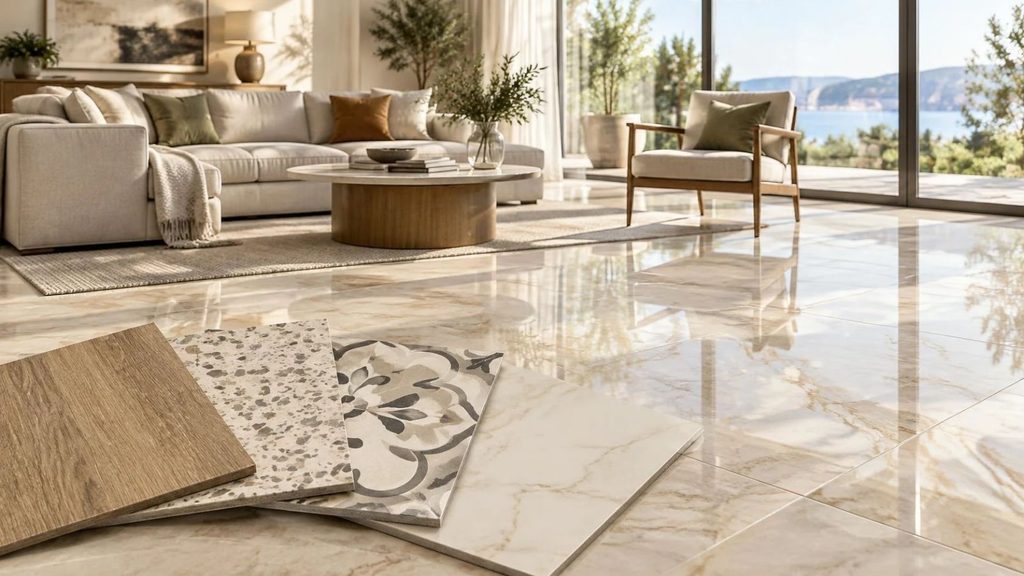
The flooring you select should complement the character of your home rather than compete with other design elements.
Here are some ways to coordinate tiles with different interior themes.
Minimalist Interiors
Minimalist homes often feature simple furniture, uncluttered layouts, and restrained colour palettes.
Flooring with subtle patterns, understated textures, and coordinated shades can reinforce this aesthetic.
Contemporary Interiors
Modern homes often combine contrasting materials, clean architectural lines, and open layouts.
Concrete-inspired surfaces, stone-effect porcelain, and contemporary geometric designs can complement these spaces.
Traditional Interiors
For homes with classic architectural details, consider flooring with natural stone patterns, warm colours, or timeless decorative elements.
Rustic and Nature-Inspired Interiors
Wood-inspired and stone-effect tiles can introduce an organic appearance. They work particularly well with natural wood furniture, earthy colours, and textured fabrics.
How Flooring Choices Differ from One Room to Another
A successful flooring plan considers how each room is used. Using the same tile throughout the property may create continuity, but different spaces can benefit from different surface characteristics.
| Area | Flooring Considerations | Design Possibilities |
| Family Room | Durability and everyday cleaning | Stone-effect porcelain |
| Kitchen | Stain resistance and suitable slip resistance | Porcelain surfaces |
| Bathroom | Wet-area suitability | Textured porcelain |
| Bedroom | Visual warmth and comfort | Wood-inspired tiles |
| Hallway | Foot traffic and maintenance | Durable porcelain |
| Dining Room | Coordination with furniture | Marble-inspired designs |
| Basement | Moisture conditions and substrate suitability | Appropriate porcelain options |
For rooms that experience moisture, select products specifically rated for the intended installation.
The Details That Make a Difference: Size, Layout and Grout
Sometimes, the overall appearance of a tiled floor depends just as much on the installation design as the tile itself.
Tile dimensions: Larger tiles can create a more continuous appearance, while smaller tiles provide greater flexibility for detailed layouts.
Grout colour: Matching grout can create a subtle finish, while contrasting grout makes the individual tile pattern more noticeable.
Installation pattern: Straight layouts offer a clean appearance, while staggered, diagonal, and other arrangements can introduce visual interest.
Room proportions: The tile layout should work with doorways, cabinetry, room dimensions, and existing architectural features.
Transitions: Consider how the flooring will meet carpet, hardwood, or other surfaces to create a neat transition between rooms.
Planning these details before installation helps achieve a coordinated result.
What Makes a Floor Tile Suitable for Canadian Homes?
Flooring in British Columbia should be selected with local living conditions in mind.
Abbotsford experiences wet weather during parts of the year, making entrance areas and other exposed spaces particularly important to consider.
When comparing flooring products, pay attention to the following:
- Slip-resistance characteristics for areas exposed to water.
- Water absorption specifications.
- Resistance to expected foot traffic.
- Surface maintenance requirements.
- Suitability for the intended indoor or outdoor installation.
- Compatibility with the property’s subfloor and installation conditions.
For covered outdoor areas or other exterior applications, make sure the tile is specifically rated for outdoor use and the relevant environmental conditions.
Planning a Flooring Renovation: What Should Your Budget Include?
The cost of a flooring project is not limited to the price per square foot of the selected tile.
A complete project estimate should account for several elements.
| Cost Component | What It Covers |
| Tile Material | Cost of selected flooring |
| Installation | Professional labour |
| Surface Preparation | Levelling and subfloor preparation |
| Grout and Adhesives | Materials required for installation |
| Cutting and Finishing | Edges, corners and transitions |
| Additional Tiles | Allowance for cuts, breakage and future repairs |
It is also useful to compare samples before purchasing larger quantities. The appearance of a tile can vary depending on lighting, room orientation, and surrounding materials.
Questions to Ask Before Selecting Your Floor Tiles
Before finalising your flooring, consider these questions:
- Is the tile designed for the area where it will be installed?
- Does its surface provide suitable slip resistance?
- How much daily foot traffic will it experience?
- Will its colour work with existing furniture and wall finishes?
- What cleaning products and maintenance procedures are recommended?
- Does the installation require specialised preparation?
- Are additional tiles available if replacements are needed later?
These questions can help you compare products more confidently and avoid choosing flooring based solely on appearance.
Explore Designer Flooring Options at Paradigm Surfaces
Finding suitable floor tiles becomes easier when you can compare different materials, patterns, and finishes.
Paradigm Surfaces offers designer tile collections for homeowners, contractors, builders, and interior designers looking for flooring and wall design solutions.
If you are searching for floor tiles in Abbotsford, you can explore the available collections online or visit the Paradigm Surfaces showroom in Surrey.
Whether your project involves a complete home renovation, a kitchen upgrade, or flooring for a new property, exploring different tile options can help you find a design that complements your requirements.
Explore the collection: https://paradigmsurfaces.ca/product-category/designer-tiles/
Final Word: Make Your Flooring a Long-Term Design Decision
Flooring is one of the few interior elements that influences almost every part of a home. The right selection can connect different rooms, complement architectural details, and support everyday use.
Instead of following a particular trend, focus on the material, finish, installation requirements, and overall design compatibility.
For anyone considering floor tiles in Abbotsford, comparing different options and understanding their practical characteristics is a good starting point for creating an interior that looks beautiful and works well for years to come.
Frequently Asked Questions
1. What should I look for when buying floor tiles in Abbotsford?
Consider the tile material, intended application, dimensions, surface finish, slip resistance, durability, maintenance requirements, and installation costs.
2. Are porcelain tiles suitable for high-traffic areas?
Many porcelain floor tiles are suitable for high-traffic residential and commercial areas. Check out the manufacturer’s technical specifications and recommendations before selecting a product.
3. Can the same floor tile be used throughout the house?
Yes, the selected product provided is suitable for each installation area. Consistent flooring can create visual continuity between connected rooms.
4. What is the difference between porcelain and natural stone flooring?
Porcelain is a manufactured material with controlled design and technical characteristics. Natural stone is quarried and has naturally occurring variations. Their maintenance and installation requirements differ.
5. How many extra floor tiles should I purchase?
A commonly used planning allowance is around 10% extra for cuts and wastage, although the required quantity depends on the room layout, tile dimensions, and installation pattern.
6. Are textured tiles suitable for bathroom floors?
Some textured tiles are designed for bathroom flooring. Always check the manufacturer’s slip-resistance information and confirm that the product is appropriate for wet-area installation.
7. How do I maintain tiled flooring?
Sweep or vacuum regularly and clean using products recommended for the particular tile material. Follow the manufacturer’s instructions for cleaning grouts and specialized surfaces.
8. Where can I explore floor tile collections near Abbotsford?
Paradigm Surfaces has a showroom in Surrey, BC, where you can explore designer tile collections. You can also browse available options through its website at paradigmsurfaces.ca.